Friday, February 3, 2012

Special edition..ValDay..

Valentine's Day..
it's identyc with couple..
then,,how's the single??
can't they celebrate val's day?
they can!!
cause val's day isn't just for a couple..val's day means..giving something to the people that u love..not just your girl/boyfriend..so,,celebrate it everyone..!!
all of u deserve to celebrate it!! *except u don't have people that u love,hhahaha..qidd..xD


so,,i just wanna say..
Happy Valentine Day
although it hasn't February,14th
hhehehe..


wish i can find my valentine..
hhaha..
truly,,when i write this blog..
i'm thinking about someone who will fill my heart..
who will deserve to accompany me..??
♥ ♥ ♥ ♥ ♥ 

Wednesday, February 1, 2012

Passion of the Modern Classique Ballet

Modern and Classic..
seem it's almost same..
but deep inside they're different..
although they're different..they have a unity..


well..this is some references..
Classical Ballet..

Classical Ballet is the most formal of the ballet styles, it adheres to traditional ballet technique. There are variations relating to area of origin, such as Russian ballet, French ballet, British ballet and Italian ballet. The Vaganova method, named after Agrippina Vaganova, the Cecchetti method, named after Enrico Cecchetti and the Bournonville method, named after Auguste Bournonville are Russian, Italian and Danish respectively and derive from the original French method.
Classical ballet is best known for its unique features and textures, such as pointe work,turn-out of the legs, and high extensions; its graceful, flowing, precise movements; and its ethereal qualities.


and this is the result of their difference..
Think of classical ballet as keeping your body like a box. You have a range of motion, but there is a line of what is acceptable, and what is not in classical ballet. There is a set technique such as Vaganova, Cechetti, R.A.D., and some people will consider Balanchine in there (but I don't agree. I think of him more as neoclassical) In addition, classical ballet usually conjures up images of Petipa ballets and the romantic ballet. 

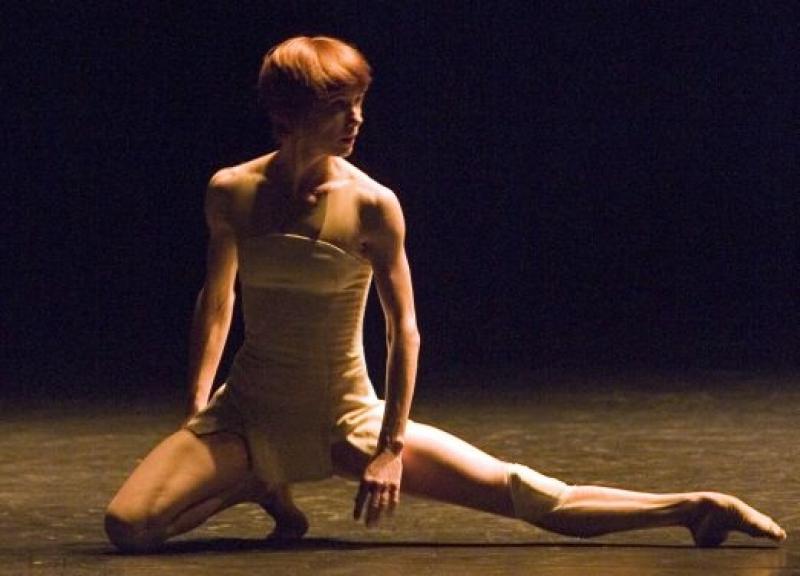
For modern ballet, you still have that box, but now you're allowed to go out of it. You still return to the box, but the traditional ballet lines can be distorted and stretched in different ways. The hips do no always have to be directly under the shoulders and the arms can differ. Think the famous Forsythe ballet "In the Middle, Somewhat Elevated" 

okk..see u at the next blog..
i'm little dizzy when doing this blog..
cause i've many problems now..
but..still i've to be strong..!!
pray vo me..=')
thx..

Thursday, January 5, 2012

Beginning from the Mystical of Italy and France

Classical Italy and Characteristiques France..

Italy..
Italian ballet is a term used to describe the training methods and aesthetic qualities seen in classical ballet in Italy.Italy has a long history with ballet, and it's widely believed that the earliest predecessor of the modern dance form originated in the Italian courts of the Renaissance, before becoming popularised in France.Today, Italian ballet recognised for two leading methods, the Cecchetti method, devised by Enricho Cecchetti and the training system of the La Scala Theatre Ballet School,the country's most prestigious professional ballet school. 


France..
French school of ballet,French style.. is characterized by an emphasis on precision, elegance, and sobriety.
Mega-star dancer & choreographer Rudolph Nureyev choreographed re-worked versions of the great academic classic ballet (such as "La Bayadère", "Swan Lake", "Romeo and Juliet", "Raymonda", "Cinderella", "The Sleeping Beauty"), and directed the Paris Opera Ballet. His artistic direction was extremely strong, and he formed and named a whole generation of young principals ("Etoiles"), called the Nureyev Babies. Since that time the French school has turned into the Nureyev school, with his very idiosyncratic style, based on all the steps that Nureyev himself excelled at. Great speed and quantity of steps, necessitating the music to be played slower are characteristic of his style. This influence lasts from the 1980s to the 2000s, when it's just starting to wane, as the Nureyev Babies retire. 
 
 Don't u know why men join ballet??it's because..
Louis XIV had founded the Académie Royale de Danse in 1661 in France, when, at the time, ballet dance was restricted to men.


okk all..
see u in the next post..^^

Saturday, November 19, 2011

Everything has a Beginning

              Do you know when you're dancing,you're showing your emotion?

    Don't you feel a passion and energetic movements surrounding by your side?

Well,in this chance..I want to tell you about Ballet. Ballet is one of many kinds of dancing.
But,in Ballet,you must have many techniques to make it to be a perfect dance.
Tenderness, Beauty, Strength, Calmness, Powerfull and Passionate Souls will accompany you when you're doing ballet.
Well,these are many kinds of ballet..
  • Beginning from the mystical of Italy and France (coming soon in January)
  • Passion of the Modern Classique Ballet (coming soon)
  • The Rising of Neoclassical Ballet (coming soon)
  • Contemporary inside you (coming soon)
Now,let the curtain opens,and let the show begin!!


Origins of Ballet

 the premiere of Tchaikovsky's ballet (1890)
Ballet is a formalized form of dance with its origins in the Italian Renaissance courts of the 15th and 16th centuries. It quickly spread to the French court of Catherine de' Medici where it was developed even further.  In the late 17th century Louis XIV founded the Académie Royale de Musique (the Paris Opera) within which emerged the first professional theatrical ballet company, the Paris Opera Ballet.

The Royal Danish Ballet and the Imperial Ballet of the Russian Empire were founded in the 1740s and began to flourish, especially after about 1850. In 1907 the Russian ballet in turn moved back to France, where the Ballets Russes of Sergei Diaghilev and its successors were particularly influential. Soon ballet spread around the world with the formation of new companies.

The etymology of the word "ballet" reflects its history. The word ballet comes from French and was borrowed into English around the 17th century. The French word in turn has its origins in Italian balletto, a diminutive of ballo (dance). Ballet ultimately traces back to Latin ballare, meaning "to dance".